1 of 7
Giant Steps
● Exploitation·hexatonic4:46
SELF_CONSTRAINS × EXPOSED × EXPLOITS
Coltrane (tenor sax), Tommy Flanagan (piano), Paul Chambers (bass), Art Taylor (drums)
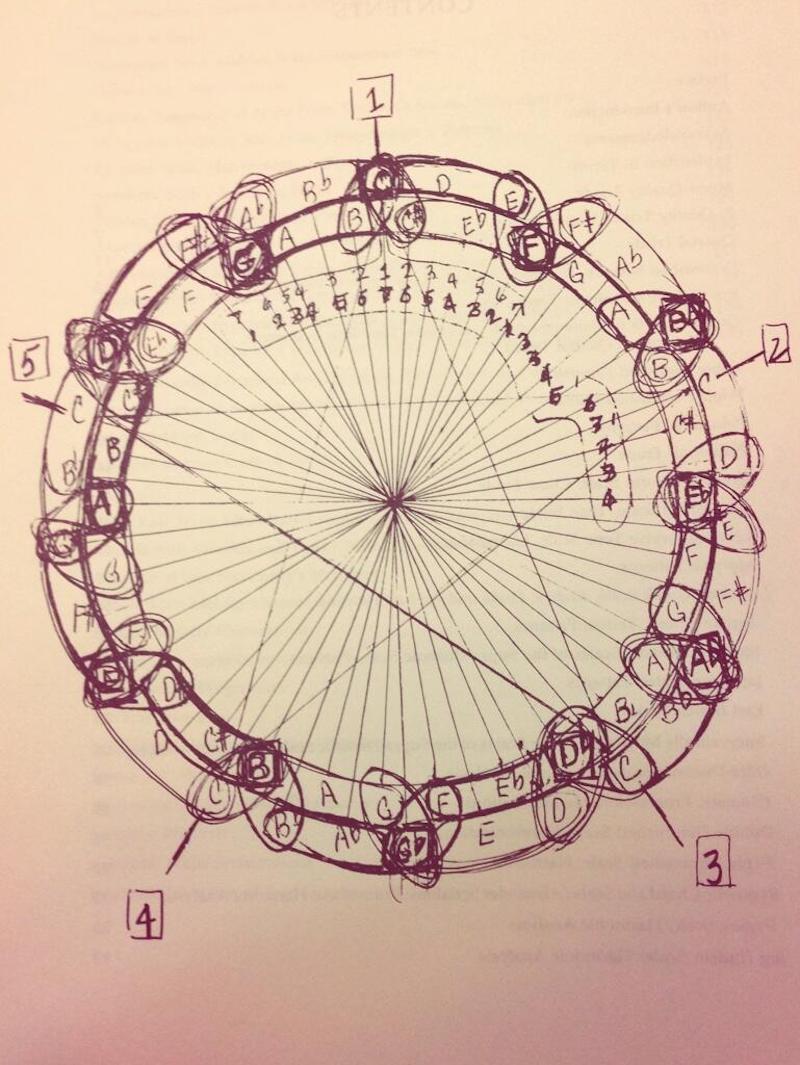
Giant Steps is the most aggressive exploitation of a specific symmetry within the fifths geometry: the augmented triad. Coltrane divides the octave into three equal parts — major thirds — and traverses the resulting key centers at maximum speed. This is not the circle of fifths being traversed; it is a property of the closed geometric space — the major-third cycle — that equal temperament makes available. The harmonic rhythm is so fast that the pianist (Tommy Flanagan) audibly struggles to keep up. This is not decoration. The entire piece activates the symmetric territory within the geometry: chaining major-third key relationships at a rate that pushes the limit of what an improviser can navigate in real time.
What to listen for
- ›The speed of the key changes — the harmony shifts every two beats, faster than almost any jazz standard
- ›Tommy Flanagan's piano solo: you can hear him reaching for chord voicings that barely exist at this tempo
- ›Coltrane's own solo: patterns that arc across all three key centers in single phrases, treating the major-third divisions as a single unified space rather than three separate keys
- ›The bass line (Paul Chambers) walking through key centers that are a major third apart — an interval that standard jazz harmony almost never chains sequentially
This is the sound of someone activating the symmetric territory within the fifths geometry — the major-third cycle that divides the octave into three equal parts. Every phrase is a path through that symmetry.